Weaving spiders not come here….
Said a fairy in Shakespeare’s ‘A Midsummer Night’s Dream’. It is a common sentiment felt by so many people. At its most extreme, arachnophobia is an intense, irrational fear of arachnids including spiders, scorpions and ticks. It is believed to be one of the most common animal phobias throughout the world, affecting up to 7% of the population. Its causes are many, including a link to evolutionary survival instincts, learnt behaviour from family members, or a specific traumatic experience with a spider.
During the autumn we tend to encounter spiders within our homes, particularly the bathroom, sometimes in the bath itself. These are male Giant house spiders (Eratigena atrica) that have left their webs in hidden corners to search for females. Contrary to popular opinion, they have not crawled up the drain pipe to the bath, but have simply fallen in and cannot escape due to the slippery surface of the bath walls. Although large, these spiders are very reluctant to bite and, even when they rarely do so, their venom is not significant to people or pets.
UK spider species are incredibly varied and, often, very beautiful to observe. All spiders are predatory creatures and many spin elaborate, silken webs to entrap insects. The orb-web spiders, such as the Garden spider, spin roughly circular webs, often clearly visible when covered in dewdrops in the early morning. This abundant spider is easily recognised by the white cross on its abdomen.
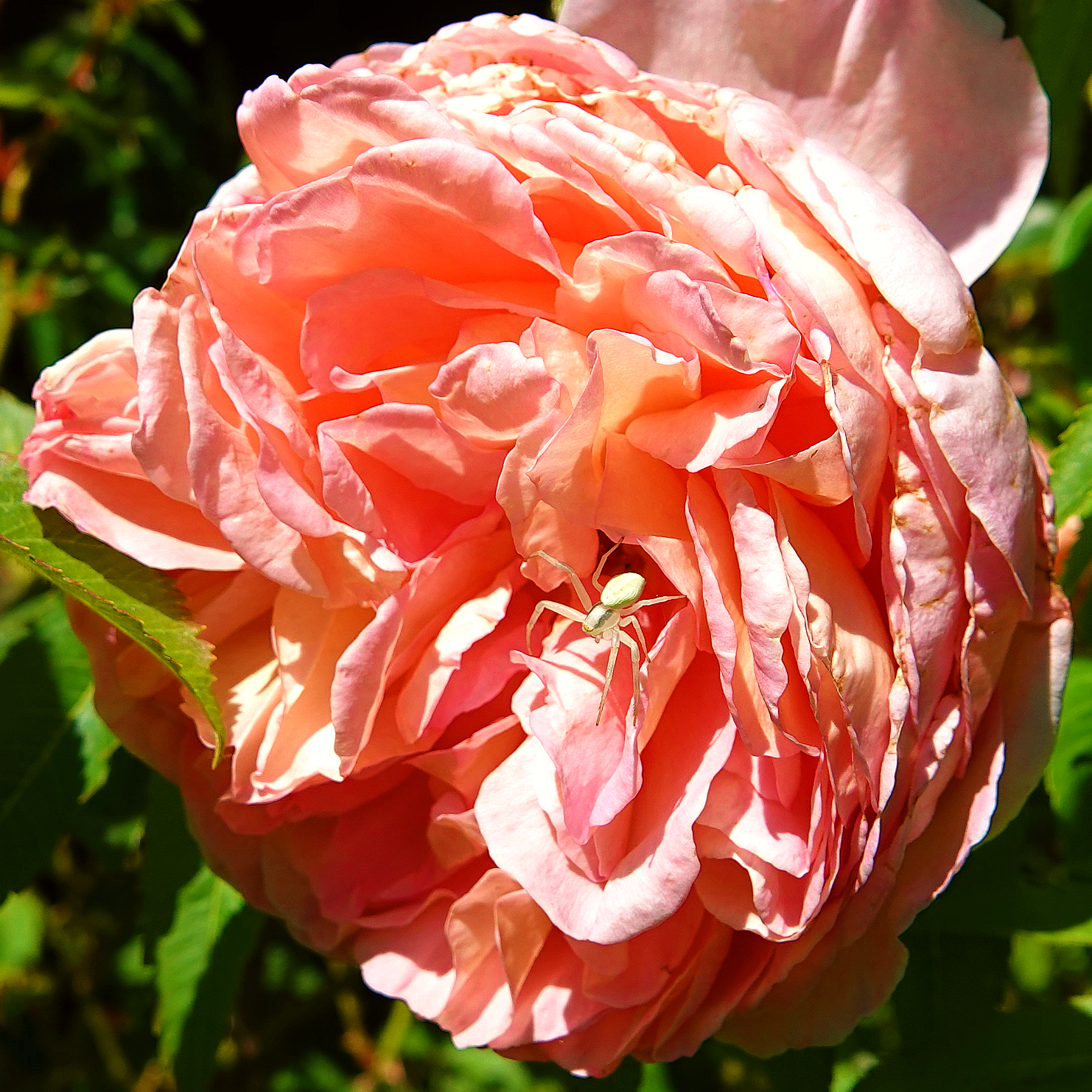
Not all spiders make use of silk snares, some actively hunt their prey while others lay in wait to pounce on unsuspecting victims. The crab spiders use the latter method and their green, yellow or white body colour means that they can be remarkably well camouflaged, hiding amongst flower petals and other vegetation.
One distinctive species that is non-native is the Noble False Widow spider (Steatoda nobilis), a large, common species. This creature originates from the Canary Island and Madeira, but is thought to have arrived in the UK in the late 19th century, probably with imported bananas. It has a distinctive skull-like marking on its abdomen and the spider likes to hide behind kitchen appliances, such as washing machines, where it is suited to the warm, dry conditions. Although it resembles the dangerous true black widow spiders, its bite is fairly mild and feels more like a wasp or bee sting. However, in rare cases some people react more severely to the venom and thus, if bitten by one, medical aid is recommended.
Further information can be found at the British Arachnological Society below.
Nigel Hester, Trustee of The Exmoor Society | Photo: Crab spider on a Rose