The wooded landscape of the British Isles is characterised by several kinds of tree, but one genus typifies our countryside – the oak. These hardwood trees are widely distributed throughout the Northern Hemisphere, with around 500 different species. Oaks have existed since the Eocene period, some 45 million years ago, evidenced by fossils. In the UK, we have two species of native oaks, the English or pedunculate oak and the durmast or sessile oak. Here on Exmoor, the sessile oak is more common and is the keynote species within temperate rainforests, such as Horner and Hawkcombe Woods.
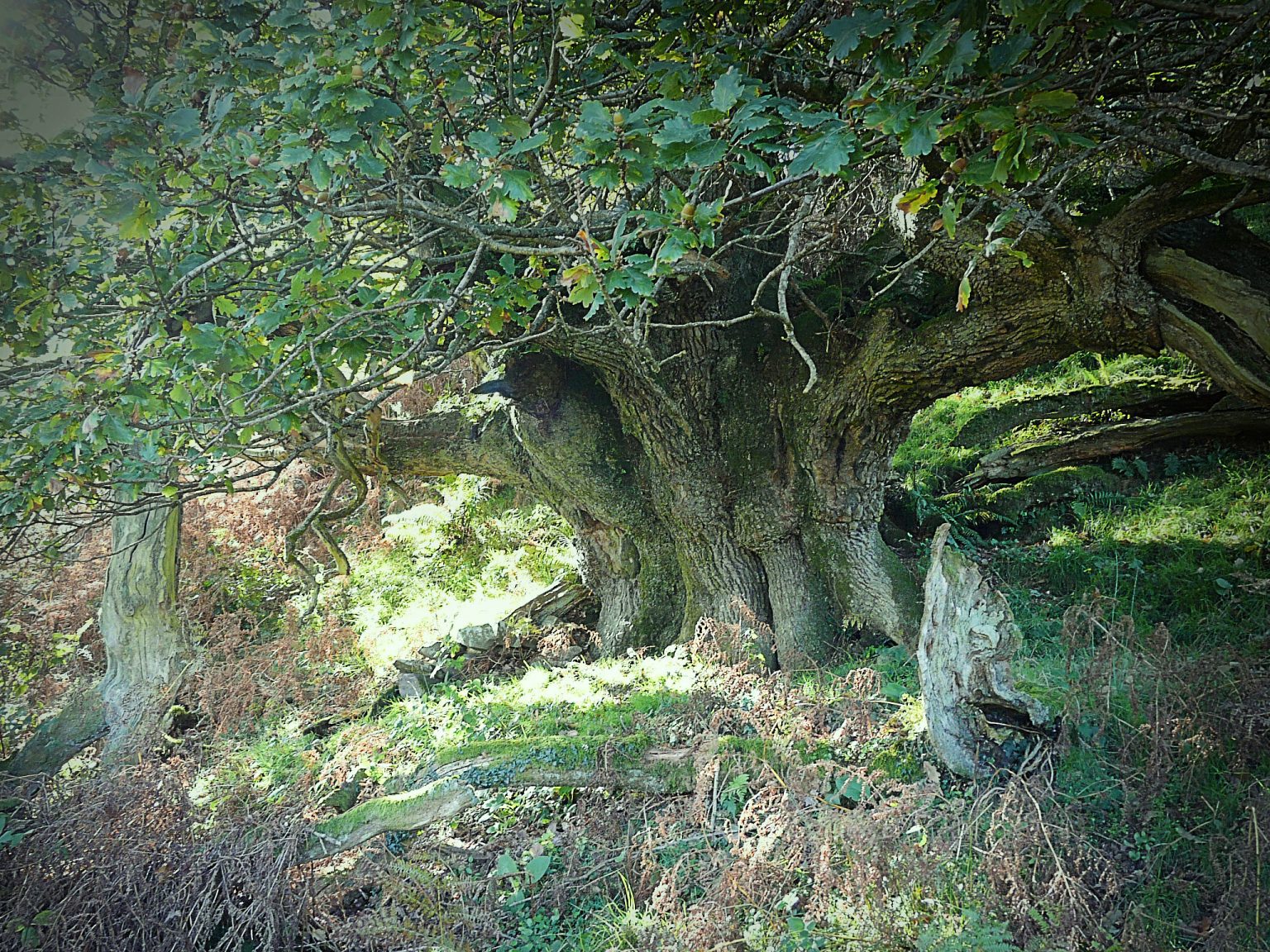
Oaks have had a strong cultural significance throughout history. Some trees are nationally recognised, such as the Queen Elizabeth Oak in Cowdray Park, West Sussex. This sessile oak has a girth of 41-42ft and is roughly 800-1000 years old. One of the largest and oldest oaks on Exmoor is ‘The General’, hidden away in a gully on the side of Cloutsham Ball, which is at least 500 years old (featured in the image above).
Since the 1970, our national woodlands have been ravaged by a succession of tree diseases that have markedly affected our landscapes of farmland and woodland. Dutch elm disease killed millions of trees throughout the UK, although native wych elms of Scotland and the North-West were more resistant to its spread. Two decades later, and first reported in 1995, Phytophthora ramorum, a fungus, infected rhododendron and Japanese larch, led to the loss of many commercial plantations. More recently, ash dieback, a chronic fungal disease, has had a major impact throughout Europe, including here in Exmoor’s woodlands. The Woodland Trust estimates that 80% of ash trees across the UK will die, with a devastating effect on the landscape and, crucially, on the many species which rely on ash.
New research indicates that there is also a major threat from Acute Oak Decline (AOD), characterised by dark, sticky fluid leaking from lesions in the trunk and crown loss. It appears that oaks with AOD symptoms emit distinctive odours that attract the Oak Splendour beetle (Agrilus biggutatus). The beetles bore into the wood to lay their eggs and, in doing so, disrupt the flow of nutrients within the tree. Furthermore, two types of bacteria associated with AOD also emit a scent which attracts the beetles.
Nigel Hester, Trustee