The weather is predicted to be influenced by high pressure over Christmas and the New Year. Showers are still possible, but it does look as if the almost continuous rainfall will ease. The rivers of Exmoor are fairly full, and the ground is absolutely saturated, making life difficult for the farming community and its livestock. Unexpectedly, however, the constant rain can bring benefits for some wildlife, particularly in the floodplain within the Porlock Vale.Before I retired from the National Trust, I managed the ‘Source to Sea’ Natural Flood Management project from 2009-2016, one of three DEFRA-funded national schemes to demonstrate how working with nature can have positive benefits for flood prevention. Working in close collaboration with the local farmer, earth banks (bunds) were created on either side of the River Aller to store excess water during major rainfall events. This groundwork was completed in the summer of 2013 and was put to its first test the following winter, when the river reached its highest level recorded at 1.04m in December. Prior to this work, flooding was a regular occurrence in the villages of Allerford and Bossington, but since then, no properties have flooded.
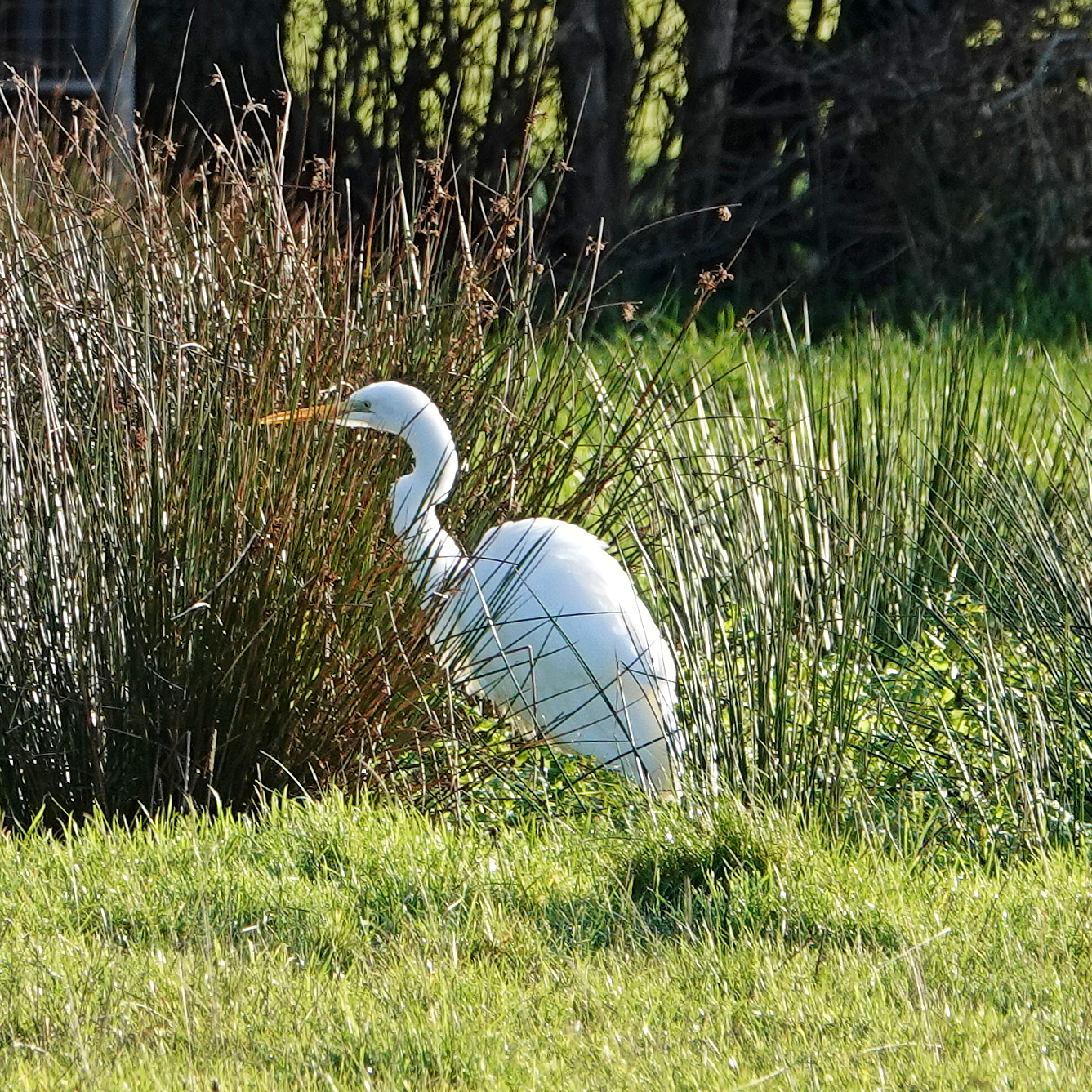
The recent heavy rainfall has resulted in excess water being held back in fields adjacent to the river. One field, Tree Meadow, which is designated as a County Wildlife Site, has many dips and hollows that are currently holding water, attracting a number of birds. Snipe are regular winter visitors, but recently it has been exciting to see a range of other wetland birds. A trio of juvenile Mute swans have taken up residence for the last three weeks on a ponded area, where they feed on the abundant, lush grass. As the light fades in the early evening, Mallard and Teal arrive, joined sometimes by a group of Wigeon. These latter birds are unmistakable even in the dark, as they make the most beautiful whistling call. The most thrilling sight recently has been a single Great White egret, which stayed for just a single day. These large yellow-billed egrets migrate to the UK in the winter, and a few now breed on the Avalon marshes.
Text and images: Nigel Hester, Trustee